The best microphones for podcasting depend on whether you want a plug-and-play USB setup, an XLR path for a mixer, or a mic kit that keeps the capsule close at your desk. These picks cover dynamic and condenser designs, with practical differences in included stands, monitoring, mute controls, and software to help match a mic to your recording space and workflow.
Quick Top Products
Samson Q2U
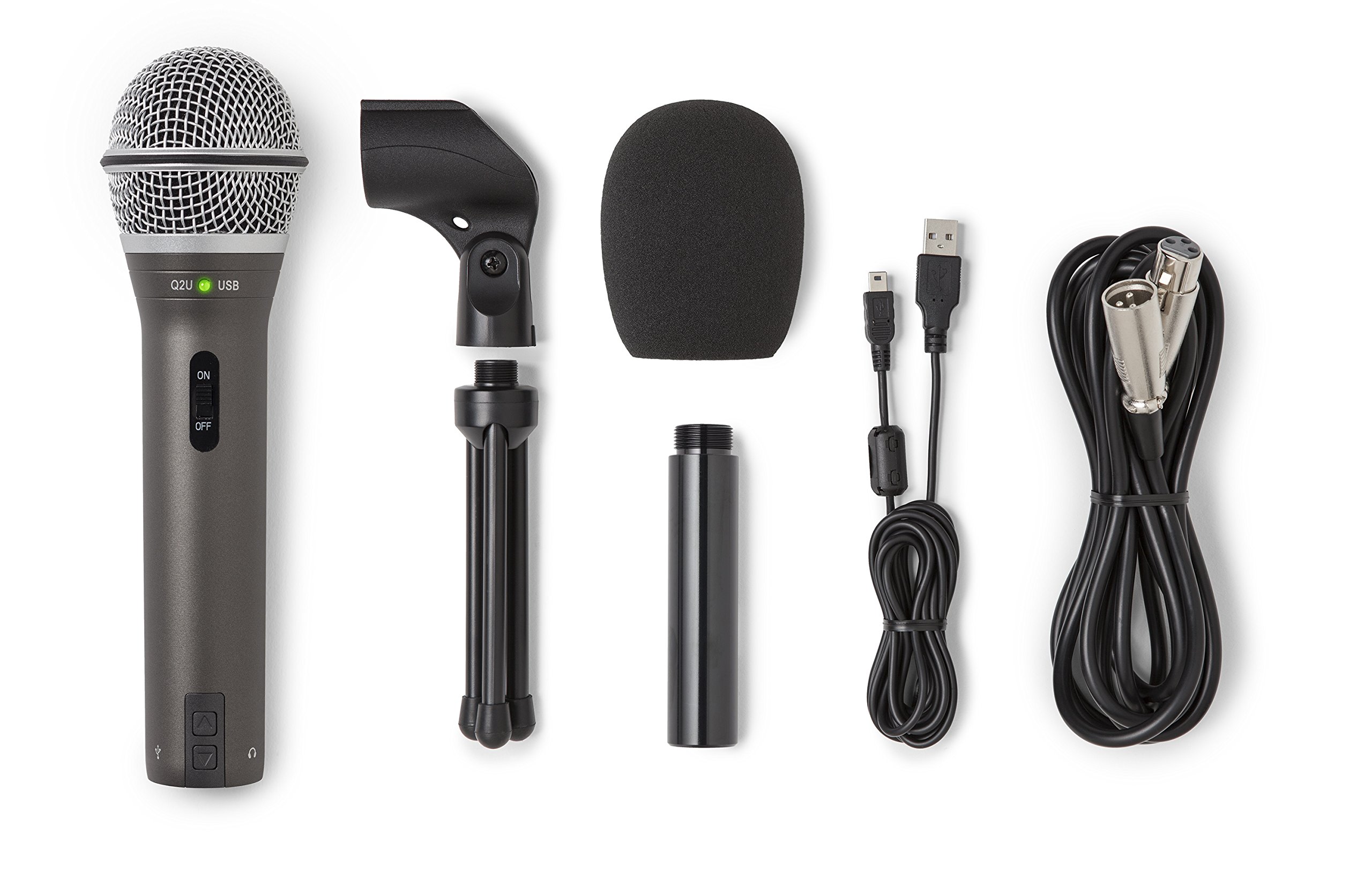
- Connects to a computer by USB-C or to compatible gear over XLR.
- Includes a desktop tripod stand, extension, clip, and windscreen.
- Comes with both USB-C and XLR cables.
Best For: Podcasters who want a handheld dynamic mic and both USB-C and XLR connection options.

MAONO PD300X
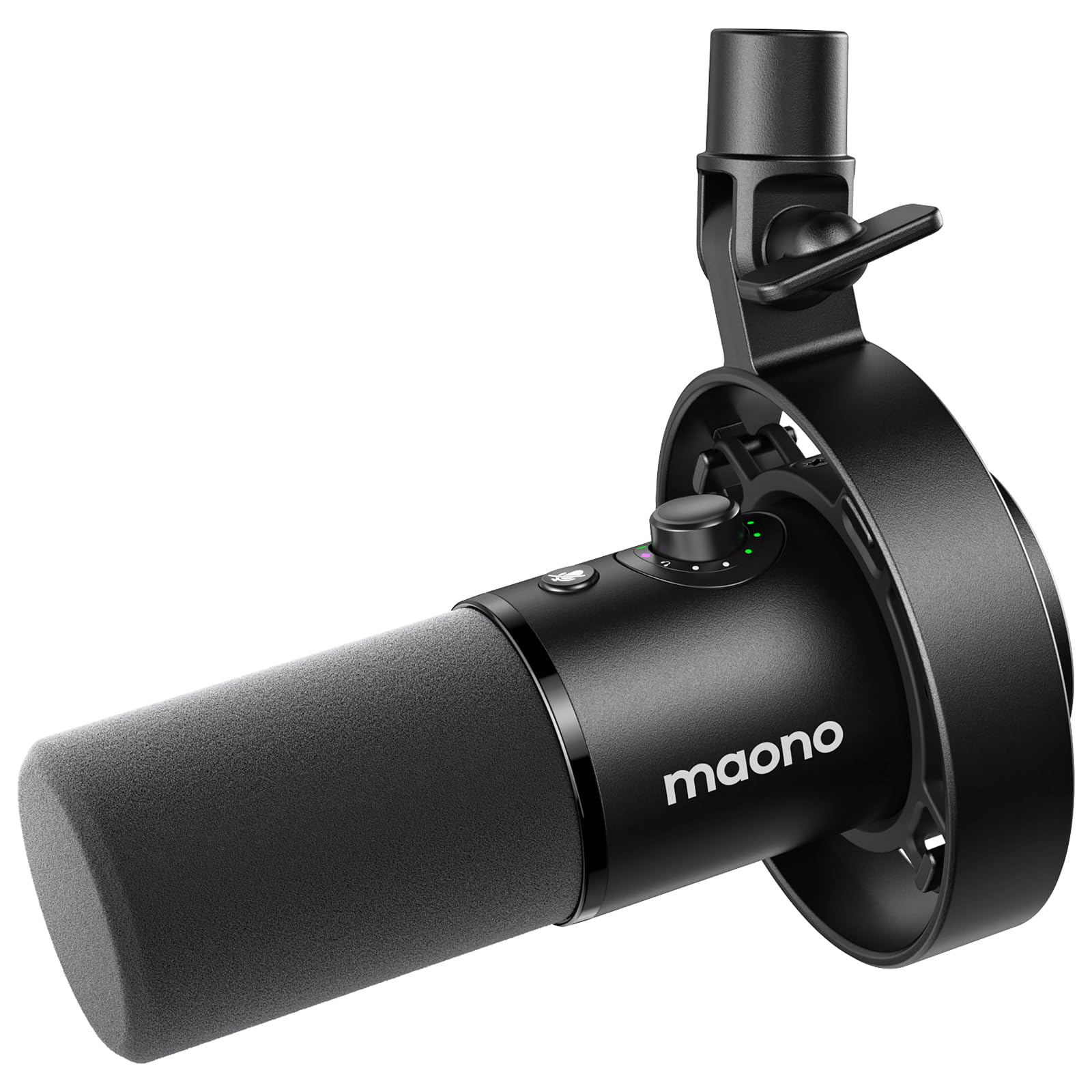
- Offers USB and XLR connection options.
- Includes EQ, limiters, compressors, and high-pass filters in MAONO Link.
- Provides four preset modes and a combined control knob.
Best For: Podcasters who want USB convenience, XLR expansion, and adjustable sound settings through software.
MAONO PD400X
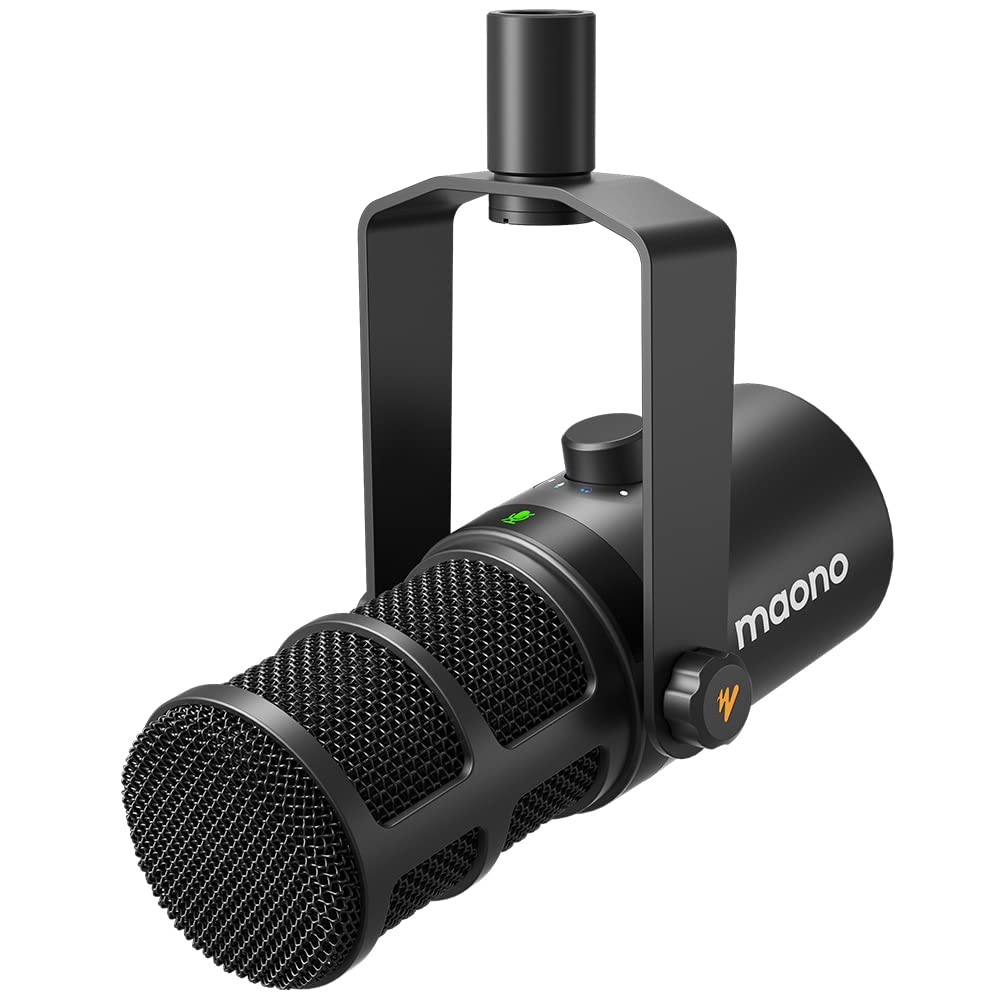
- Supports plug-and-play USB and analog XLR output.
- Offers EQ, limiter, and compressor controls in the app's advanced mode.
- Has a multifunction knob and LED-indicator touch mute.
Best For: Home podcasters who want onboard mute and controls plus software options for tone and dynamics.
FIFINE AmpliTank K688
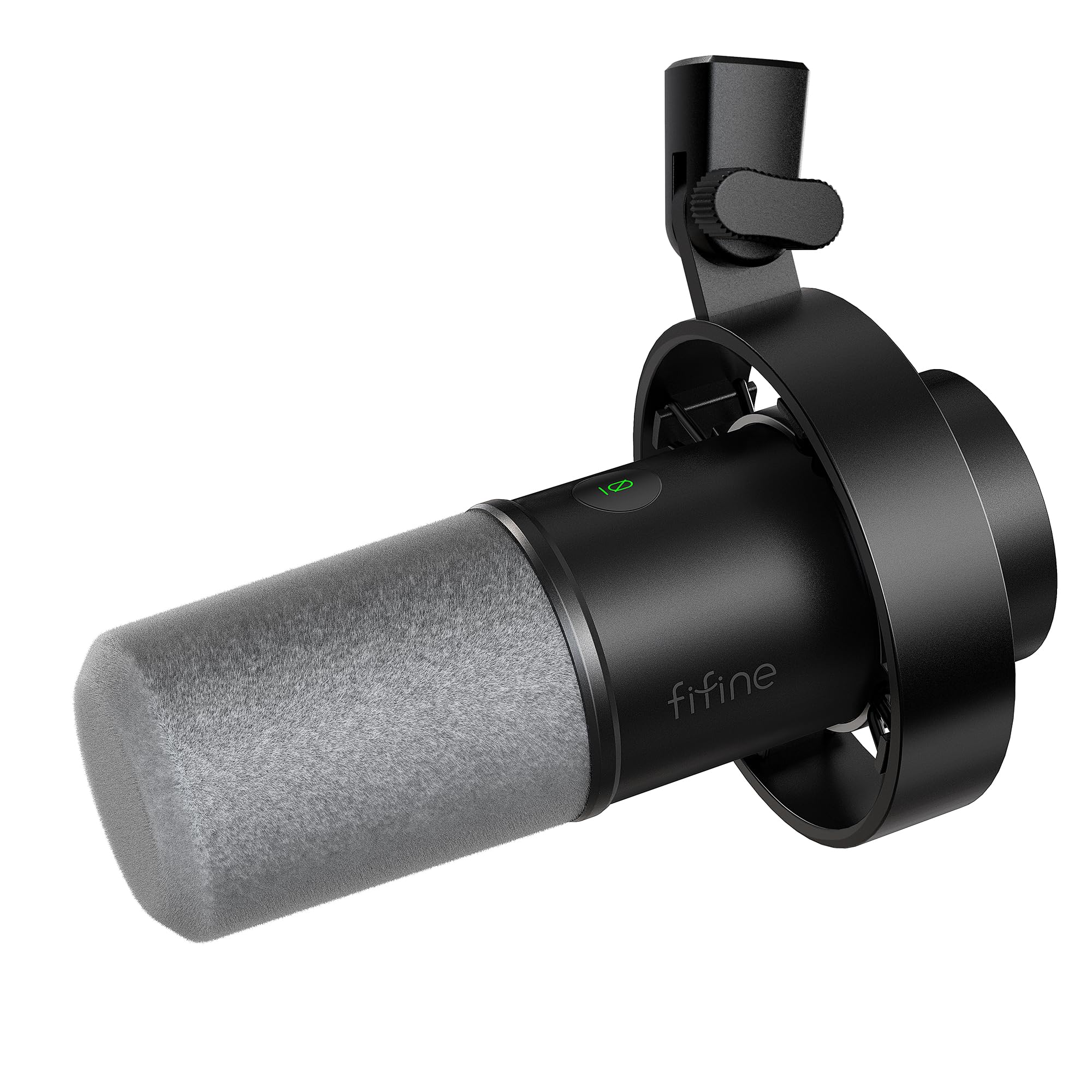
- Supports direct USB connection and XLR output.
- Includes a shock mount, windscreen, and USB cable.
- Provides mute, gain, and headphone monitoring controls in USB mode.
Best For: Podcasters who want a dynamic USB/XLR mic with headphone monitoring and a supplied shock mount.
FIFINE AmpliGame AM8 White
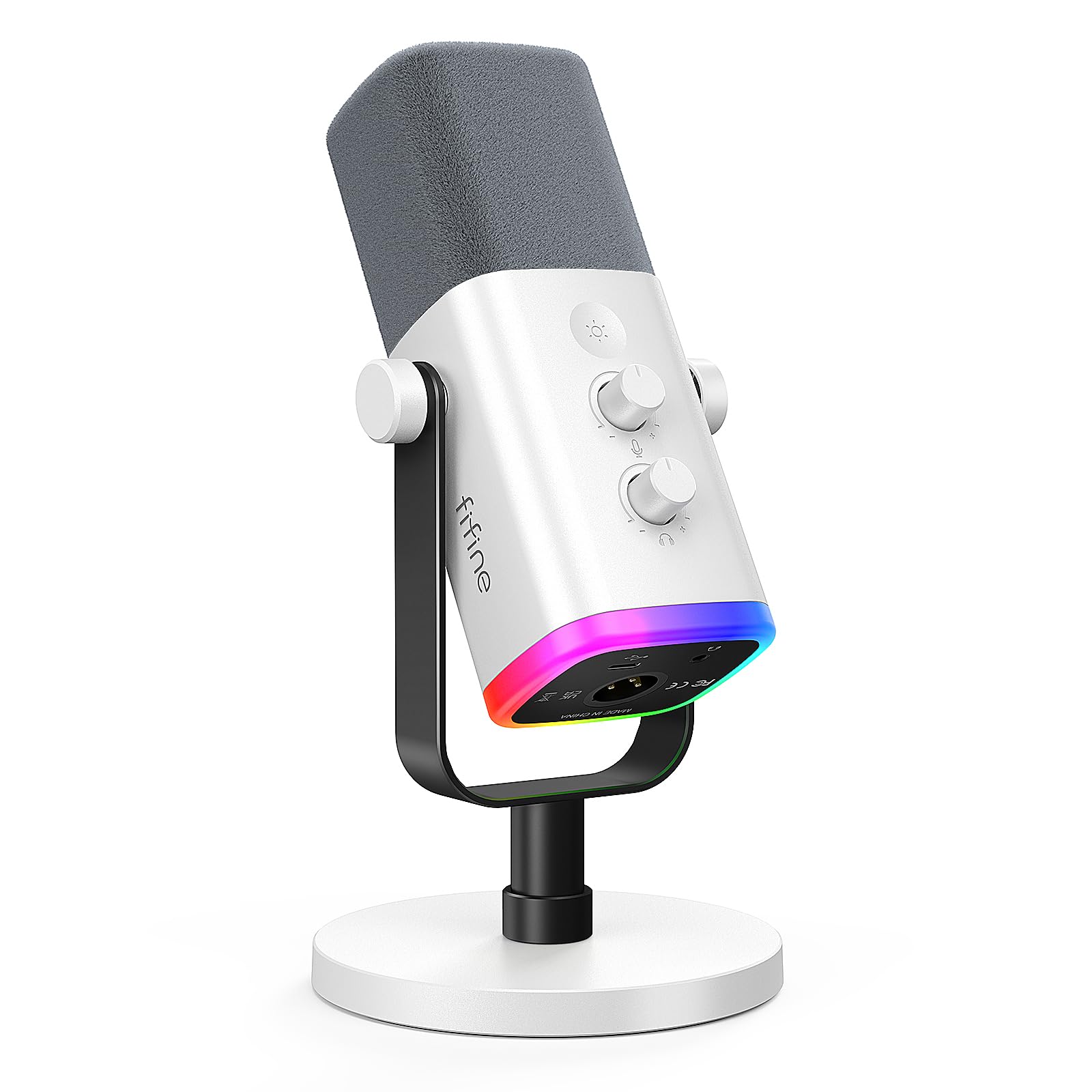
- Connects over USB or XLR.
- Has tap-to-mute, gain, headphone, and headphone-volume controls over USB.
- Includes RGB lighting controllable by tapping the RGB button.
Best For: Podcasters who share a desk with streaming and want USB/XLR connectivity plus quick controls.
FIFINE AmpliGame AM8T
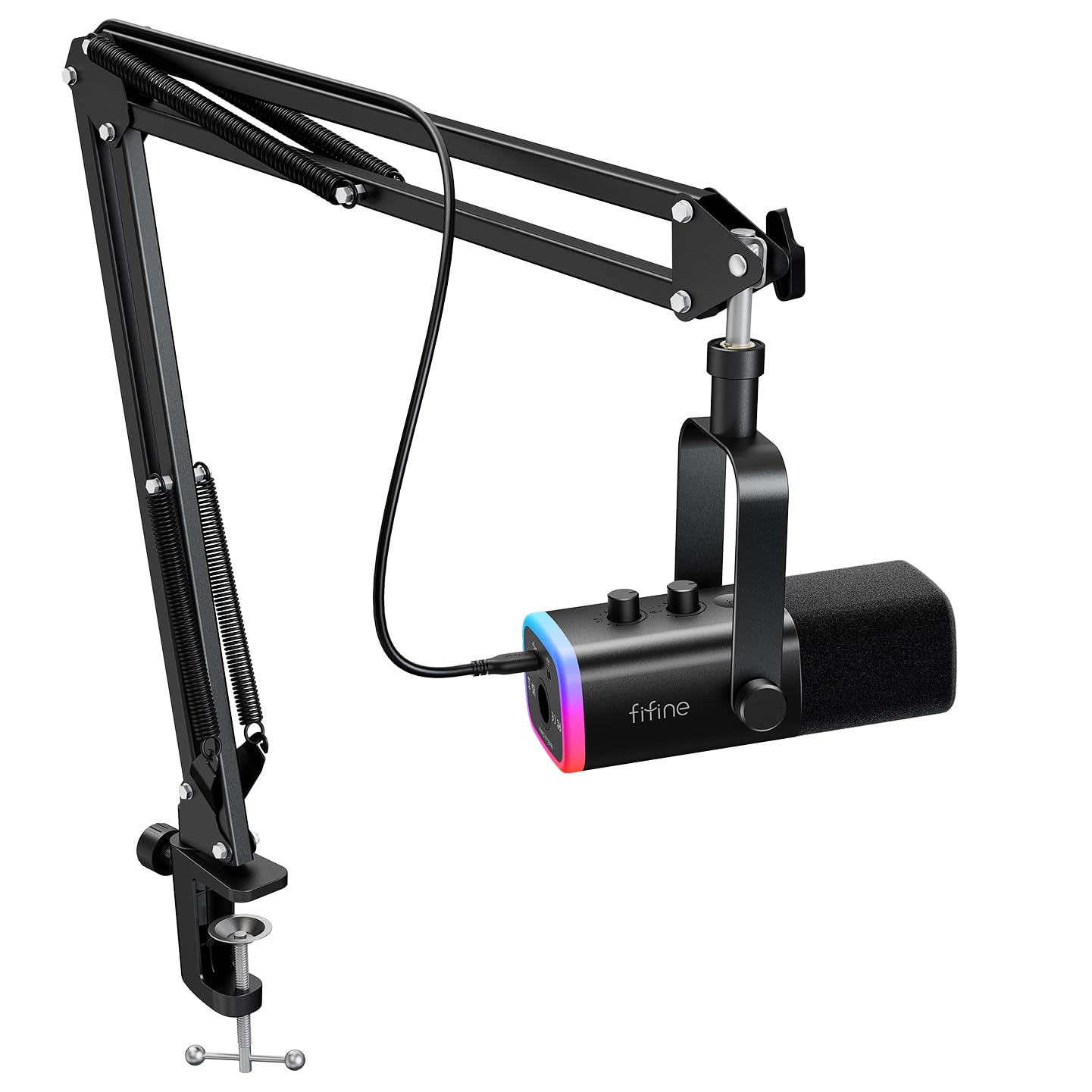
- Supports plug-and-play USB and XLR connection options.
- Includes a boom arm stand, clamp, and USB cable; XLR cable is not included.
- Includes a mute button, gain knob, and headphone jack for real-time monitoring.
Best For: Desk podcasters who want a dynamic USB/XLR mic and an included adjustable boom arm.
FIFINE AmpliTank K688 Pink
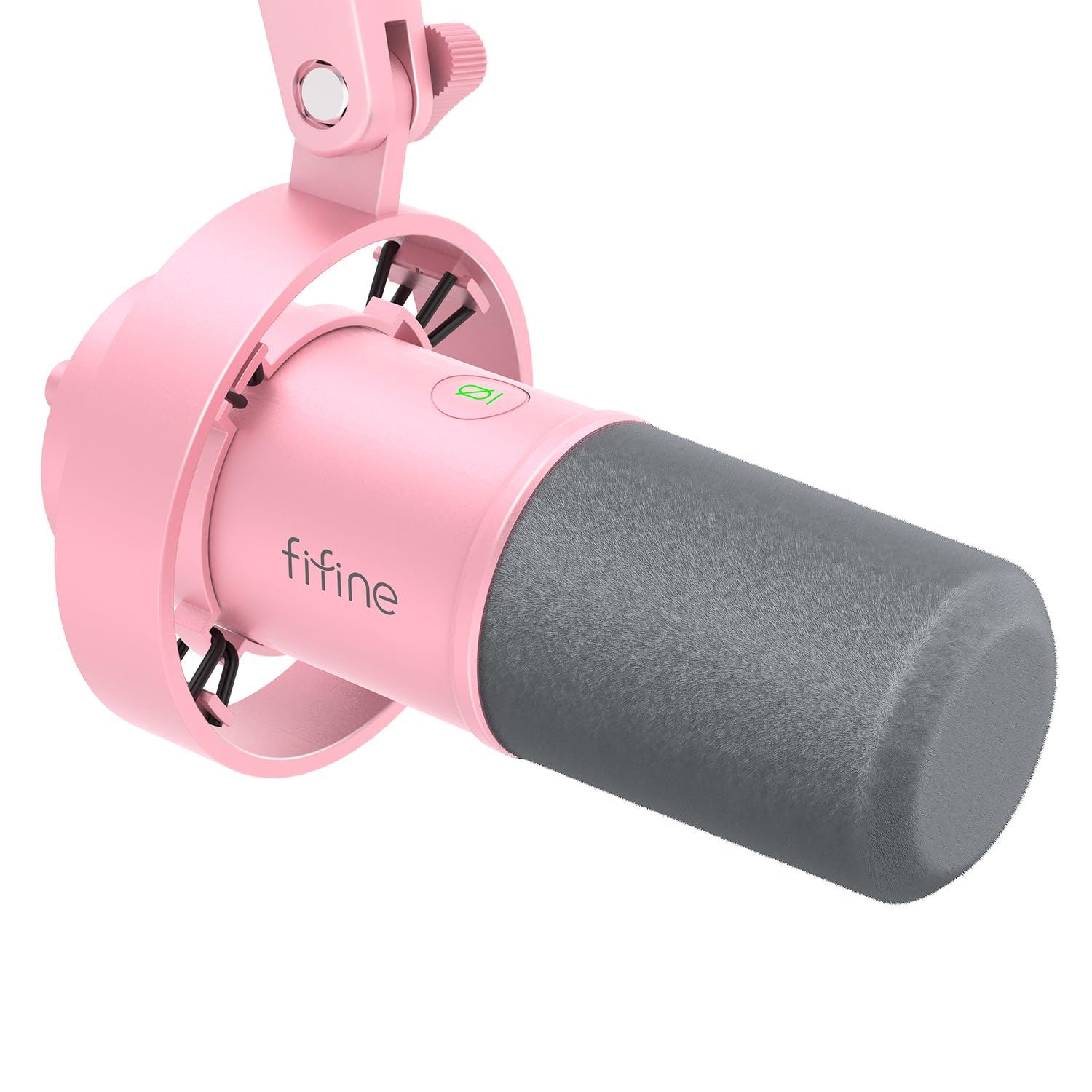
- Offers USB and XLR connectivity for different recording setups.
- Includes a shock mount and windscreen.
- Provides mute, volume, and headphone monitoring controls over USB.
Best For: Podcasters seeking USB monitoring controls and XLR expansion in a mic-only package.
FIFINE AmpliTank K688 White
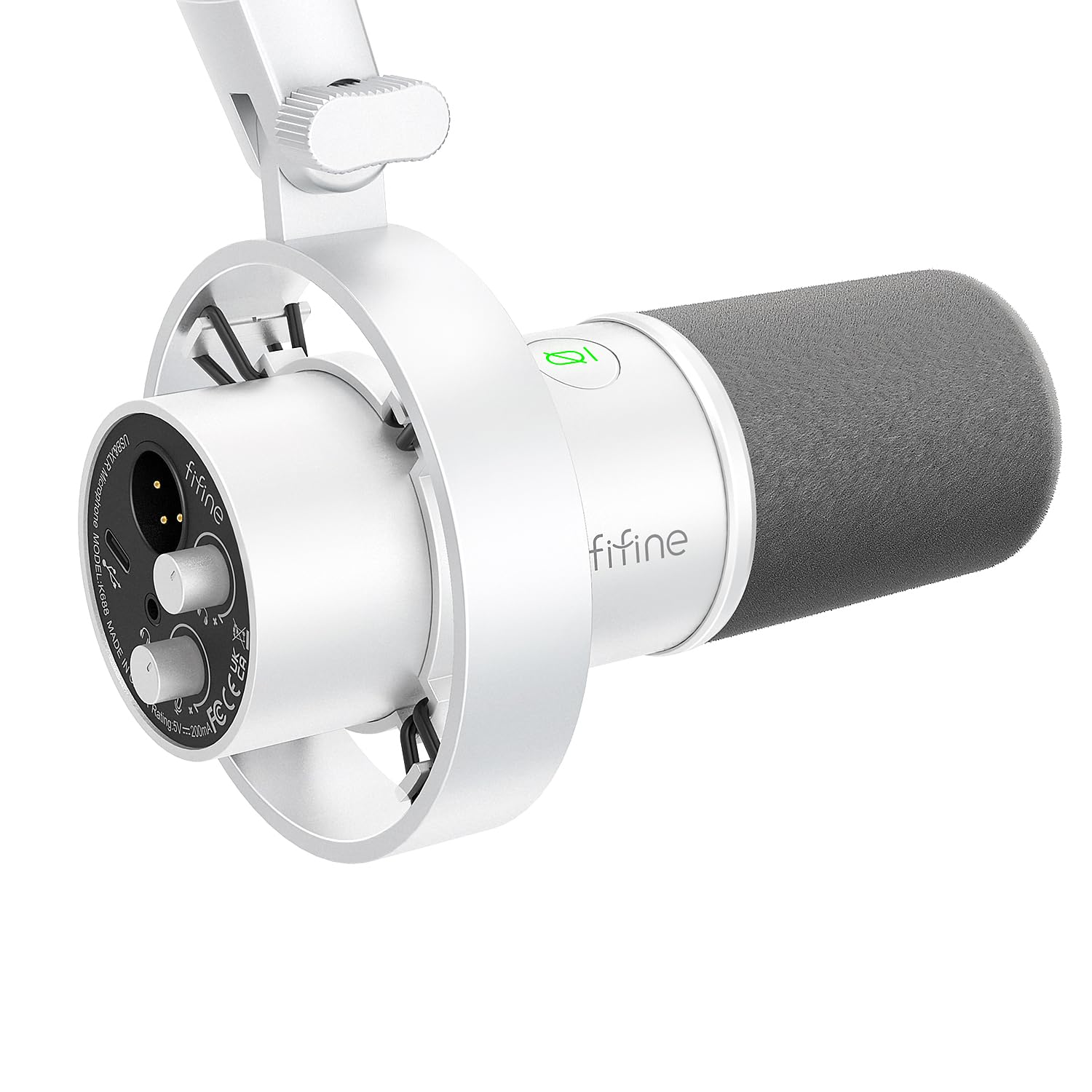
- Provides USB and XLR connection choices.
- Includes a shock mount and windscreen.
- Offers mute, volume, and headphone-monitoring controls over USB.
Best For: Podcasters who prefer a white dynamic mic with USB controls, a shock mount, and XLR capability.
MAONO PD100
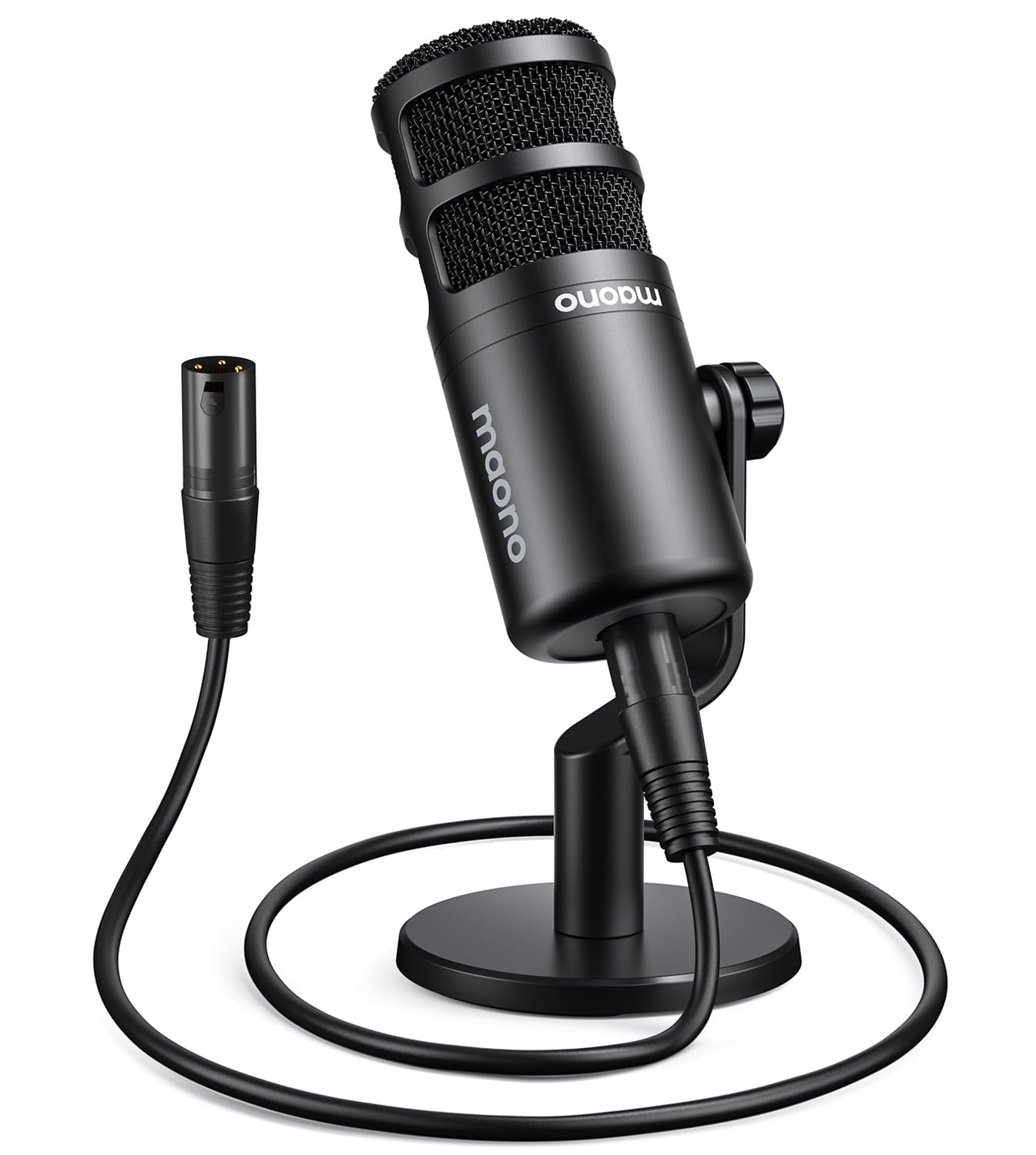
- Uses an XLR connection with an audio interface or mixer.
- Includes a desktop stand, rod extender, metal base, and XLR cable.
- Has a cardioid pattern and top-address pickup orientation.
Best For: Podcasters who already use an XLR interface or mixer and want a desktop stand included.
MAONO DM40
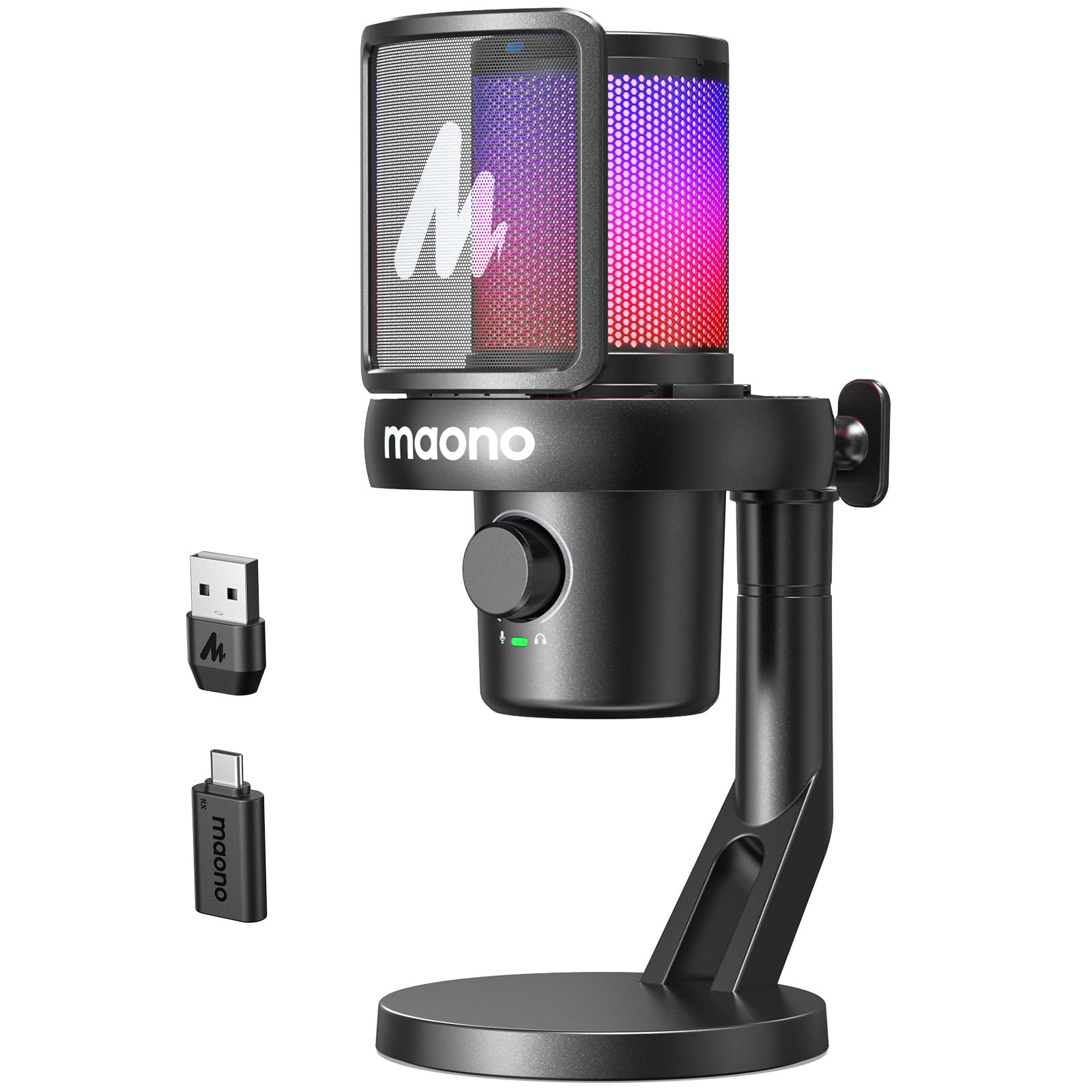
- Supports wireless USB-C dongle use and a wired connection.
- Offers three levels of noise cancellation.
- Provides up to 40 hours of continuous use.
Best For: Podcasters who need a wireless desktop mic and value software noise controls and scene presets.
USB-to-XLR Starter Pack
Samson Q2U Dynamic USB-C/XLR Microphone
The Samson Q2U is a dynamic handheld microphone that can connect over USB-C to a computer or use XLR in a more traditional recording setup. That flexibility makes it a useful fit if you want to start with direct computer recording and keep an interface or mixer option open.
The pack includes a desktop tripod stand, extension, clip, windscreen, and both USB-C and XLR cables, so the core connection accessories are covered. It is a straightforward choice for spoken-word recording; check your computer's USB interface and how you plan to position a handheld mic before buying.
Best For: Podcasters who want a handheld dynamic mic and both USB-C and XLR connection options.
| Pros | Cons |
|---|---|
|
|
Choose the Q2U if you value connection flexibility and want the basic stand and cables in the same pack. Its handheld format calls for deliberate positioning during recording, while a boom-arm kit may be more convenient for a fixed desk setup.
Before buying, confirm whether you prefer monitoring through the computer or need controls on the microphone itself; those controls are not specified here.
Software-Tunable Dynamic Mic
MAONO Dynamic Microphone-XLR USB Podcast Recording Mic: for Vocal Recording, Content Creation, Home Studio, Voiceover, with 192kHz/24bit, Noise Reduction, Mic Gain, Monitoring, Mute (PD300X)
The MAONO PD300X pairs USB and XLR connections with a software-based control set aimed at shaping a spoken-word sound. Its MAONO Link app includes EQ, limiters, compressors, and high-pass filters, while four preset modes provide a quicker way to change setups.
On the mic, a combined knob handles gain, headphone volume, and monitoring, and a mute button is available. The 192kHz/24bit specification is a recording-format detail, not a guarantee of better results by itself.
Consider this option if you want to tune your signal; check which accessories your setup needs, since a stand is not specified.
Best For: Podcasters who want USB convenience, XLR expansion, and adjustable sound settings through software.
| Pros | Cons |
|---|---|
|
|
Pick the PD300X if you want to adjust EQ and processing in software while retaining an XLR route for a mixer or interface. Its onboard combined knob simplifies routine gain and monitoring changes, but the record does not identify a stand or mounting hardware.
Compare the included accessories and your intended USB or XLR workflow before choosing it over a complete mic kit.
App-Controlled USB/XLR Dynamic
MAONO Dynamic Microphone, USB/XLR Podcast PC Microphone with Software, EQ,Tap-to-Mute, Headphone Jack, Gain Knob & Volume Control, Studio Mic for Broadcast, Recording, Streaming & Gaming (PD400X)
The MAONO PD400X is a dynamic podcast microphone with both USB and XLR outputs. USB mode is plug and play, while the MAONO Link app offers standard and advanced modes, including EQ, limiter, and compressor adjustments.
Its three-in-one knob manages mic gain, headphone volume, and monitor mix; a touch mute key has an LED indicator. These controls can be useful during a solo recording or live session.
The included notes do not identify a stand or cable package, so check the mounting and connection accessories needed for your recording position before buying.
Best For: Home podcasters who want onboard mute and controls plus software options for tone and dynamics.
| Pros | Cons |
|---|---|
|
|
The PD400X suits podcasters who want to begin over USB and have an XLR route available for a later setup. Its controls and app settings offer more adjustment than a basic plug-and-play mic, but the available details do not identify included mounting accessories.
Factor in the stand and cable you will need, and decide whether you will use the app's extra processing or prefer a simpler recording chain.
USB/XLR Mic With Shock Mount
FIFINE Dynamic Microphone, XLR/USB Podcast Recording PC Microphone for Vocal Voice-Over Streaming, Studio Metal Mic with Mute, Headphone Jack, Monitoring Volume Control, Windscreen-Amplitank K688
The FIFINE AmpliTank K688 combines USB and XLR connections with a dynamic capsule, a front mute control, gain adjustment, and headphone monitoring. Its cardioid pattern is intended to focus on sound from the front, while the included shock mount and windscreen address desk vibration and plosive sounds.
USB connection supports direct computer use; the listed controls are available in USB mode. For XLR, plan on an interface or mixer and a separate XLR cable.
The package does not include a boom arm or mic stand, so check your mounting plan before choosing it for a fixed podcast desk.
Best For: Podcasters who want a dynamic USB/XLR mic with headphone monitoring and a supplied shock mount.
| Pros | Cons |
|---|---|
|
|
Choose this K688 if you want USB convenience now and an XLR connection option later, with monitoring and a shock mount included. The main practical tradeoff is that the kit does not supply a stand or XLR cable, and the built-in controls work only through USB.
Make sure your recording setup can position the mic close enough and budget for mounting hardware if you do not already have it.
Compact Dynamic With RGB Controls
FIFINE XLR/USB Gaming Microphone for Streaming Podcasting, PC Computer RGB Mic, with Gain Knob, Mute Button, Monitoring Jack, Gamer Mic for Recording Video Creation-AmpliGame AM8 White
The white FIFINE AM8 is a dynamic USB/XLR microphone with tap-to-mute, gain adjustment, a headphone jack, and RGB lighting. The controls and lighting are available over USB, while XLR provides a connection to a mixer or sound card.
Its end-address design means the mic should face the audio source; the suggested recording distance is 2 to 6 inches. This close positioning is a practical consideration for spoken-word use.
Choose it if you want a compact desktop mic that can serve both podcast and streaming tasks, and verify whether you need to add a boom arm or other mount.
Best For: Podcasters who share a desk with streaming and want USB/XLR connectivity plus quick controls.
| Pros | Cons |
|---|---|
|
|
The AM8 fits a desk shared by podcasting and streaming, especially if USB controls and a visual mute cue matter to your workflow. Its close recording range calls for a mic position that stays practical during speech.
XLR is available for a mixer or sound card, but the listed USB-only controls and lighting will not carry over in that mode. Check what stand or arm you need to position it.
Dynamic Kit With Boom Arm
FIFINE XLR/USB Gaming Microphone Set, Dynamic PC Mic for Streaming Podcasting, Computer RGB Mic Kit with Boom Arm Stand, Mute Button, Headphones Jack, for Recording Vocal Voice-Over-AmpliGame AM8T
The FIFINE AM8T is a dynamic USB/XLR microphone kit that includes a boom arm, clamp, USB cable, and windscreen. USB is plug and play for computer recording, while XLR can connect to a mixer or sound card; the XLR cable is not included.
The mic also has a mute button, gain knob, headphone jack, and headphone-volume control, making it possible to monitor and adjust during USB sessions. RGB lighting is controllable without software.
This kit is a practical fit for a desk where positioning matters, though its clamp is intended for desktops under 2 inches thick.
Best For: Desk podcasters who want a dynamic USB/XLR mic and an included adjustable boom arm.
| Pros | Cons |
|---|---|
|
|
Choose the AM8T if you want the boom arm and core USB setup in one package, with XLR available for future expansion. Its mounting clamp has a thickness limit, so check your desk before buying.
The XLR cable is separate, and the mic's built-in controls are useful for a USB workflow. If you already own a stand or prefer a smaller desktop footprint, a mic-only model may be simpler.
Dynamic Mic With USB Monitoring
FIFINE XLR/USB Dynamic Microphone, Studio XLR Vocal Podcast Microphone for Recording, USB Streaming Mic with Mute Button, Gain Knob, Headphones Monitoring for Voice-Over, Video-Amplitank K688 Pink
This pink FIFINE K688 is a dynamic USB/XLR microphone with a cardioid pattern, mute and volume controls, a headphone jack, and monitoring-volume adjustment. Over USB, it can connect directly to a computer and use its onboard controls.
XLR supports connection to an interface or mixer, with the notes recommending an XLR-to-XLR cable for that route. A shock mount and windscreen are included, but the package does not include a boom arm, mic stand, or XLR cable.
It suits a podcaster who already has mounting hardware or wants to select a separate stand for the desk.
Best For: Podcasters seeking USB monitoring controls and XLR expansion in a mic-only package.
| Pros | Cons |
|---|---|
|
|
This K688 is a fit if the pink finish suits your desk and you want USB controls with an XLR upgrade path. The shock mount and windscreen are included, but you need to supply mounting hardware and an XLR cable if those are part of your setup.
Consider the USB-only control limitation before choosing it for a mixer-based workflow where you expect to adjust settings at the mic.
White Dynamic Mic With Monitoring
FIFINE Studio XLR Dynamic Microphone, USB PC Podcast Microphone for Streaming Recording, XLR/USB Vocal Mic with Tap-to-Mute, Gain Knob, Headphones Monitoring-Amplitank K688 White
The white FIFINE K688 offers the same core approach as other K688 options: dynamic USB/XLR connections, cardioid pickup, USB mute and volume controls, and headphone monitoring. Its supplied shock mount and windscreen support a desk recording setup, but no boom arm, mic stand, or XLR cable is included.
The listed details also describe a 130dB SPL specification; that figure is a handling specification, not a promise about room sound. This version makes sense when the finish fits your setup and you already have a way to mount it.
Confirm that your preferred connection mode meets your control needs.
Best For: Podcasters who prefer a white dynamic mic with USB controls, a shock mount, and XLR capability.
| Pros | Cons |
|---|---|
|
|
Pick this version when the white finish and dual USB/XLR connection match your setup. Its functionality closely overlaps the pink K688, so color and offer details are the meaningful differences in the supplied records.
As with that variant, plan for a separate stand or arm and XLR cable if needed. Check whether you will record over USB, where the controls work, or XLR, where they do not.
Desktop Dynamic XLR Set
MAONO PD100 XLR Podcast Microphone, Cardioid Studio Dynamic Metal Desk Mic | Compatible with Audio Interface, Audio Mixer, Sound Card for Vocal Recording, Streaming, Voiceover, Music, Content Creation
The MAONO PD100 is a dynamic XLR microphone sold with a desktop stand, rod extender, metal base, and XLR cable. Its cardioid pickup and top-address design are central to positioning: speak toward the top, with the included extender available to bring the mic closer.
It has a built-in double-layer pop filter, intended to attenuate plosives. Unlike the USB/XLR models in this roundup, it does not offer a direct USB connection, so a compatible interface or mixer is part of the setup.
This makes it most suitable for someone who already records through XLR equipment.
Best For: Podcasters who already use an XLR interface or mixer and want a desktop stand included.
| Pros | Cons |
|---|---|
|
|
Choose the PD100 if you already have an XLR interface or mixer and want the desk stand and cable included. Its top-address orientation and rod extender are useful details for a tabletop podcast setup.
It is less convenient for a direct-to-computer workflow because no USB connection is specified. Check that your interface has the connection and monitoring features you need before settling on this standalone XLR route.
Wireless Desktop Recording
MAONO Wireless Microphone for PC,Gaming Streaming Condenser Mic with Software AI Voice Change,3-Level Noise Cancellation,Custom EQ,Gain Control USB Mic for Podcast Recording (DM40-Black)
The MAONO DM40 is a wireless USB condenser microphone with a USB-C dongle and a wired connection option. Its notes give up to 40 hours of continuous use and describe three noise-cancellation levels, scene presets, EQ, gain, mute, monitoring, and RGB controls through the microphone or software.
The claimed battery runtime is an upper figure, so recording length and connection mode are worth checking against your routine. Wireless use can simplify a desk or mobile setup, but consider whether you want a desktop mic and whether software features fit your recording workflow.
Best For: Podcasters who need a wireless desktop mic and value software noise controls and scene presets.
| Pros | Cons |
|---|---|
|
|
The DM40 is the distinct choice here for someone who wants a wireless option and software scene settings. It trades the simple fixed cable arrangement of a wired mic for battery and connection-mode considerations.
Its stated runtime is up to 40 hours, not a guaranteed result for every use. Confirm how the microphone is physically supported and whether the USB-C dongle suits your computer before choosing it for regular podcast sessions.
How to Choose Microphones For Podcasting
How We Picked Microphones for Podcasting
This roundup focuses on microphones with a clear spoken-word use case and a practical fit for home recording. We selected a mix of dynamic and condenser designs, direct USB models, and XLR or dual-connection options so readers can match the mic to a computer-only setup or an interface-based studio.
Included accessories matter in this category. A boom arm can keep a mic close without occupying the center of a desk, while a desktop stand makes setup simpler but can transmit desk movement.
We also considered whether a product includes monitoring, mute controls, a windscreen, or a shock mount.
Comparing Podcast Microphones and Connection Types
USB models connect directly to a computer, which keeps the setup compact. The Samson Q2U, MAONO PD400X, and FIFINE K688 models also offer XLR, while the MAONO PD100 is XLR-only and suits a user who already has an interface or mixer.
The DM40 adds wireless connectivity, which changes the setup tradeoff by introducing battery runtime and a dongle.
The included hardware separates these picks in practical ways. The FIFINE AM8T supplies a boom arm and clamp, while the K688 models include a shock mount but require a separate stand or arm.
The Q2U includes both USB-C and XLR cables with a tripod stand. The PD100 includes an XLR cable and tabletop support.
Compare the product table for the remaining controls and package differences.
| Product | Standout features | Best for |
|---|---|---|
| Samson Q2UCheck Price |
| Podcasters who want a handheld dynamic mic and both USB-C and XLR connection options. |
| MAONO PD300XCheck Price |
| Podcasters who want USB convenience, XLR expansion, and adjustable sound settings through software. |
| MAONO PD400XCheck Price |
| Home podcasters who want onboard mute and controls plus software options for tone and dynamics. |
| FIFINE AmpliTank K688Check Price |
| Podcasters who want a dynamic USB/XLR mic with headphone monitoring and a supplied shock mount. |
| FIFINE AmpliGame AM8 WhiteCheck Price |
| Podcasters who share a desk with streaming and want USB/XLR connectivity plus quick controls. |
| FIFINE AmpliGame AM8TCheck Price |
| Desk podcasters who want a dynamic USB/XLR mic and an included adjustable boom arm. |
| FIFINE AmpliTank K688 PinkCheck Price |
| Podcasters seeking USB monitoring controls and XLR expansion in a mic-only package. |
| FIFINE AmpliTank K688 WhiteCheck Price |
| Podcasters who prefer a white dynamic mic with USB controls, a shock mount, and XLR capability. |
| MAONO PD100Check Price |
| Podcasters who already use an XLR interface or mixer and want a desktop stand included. |
| MAONO DM40Check Price |
| Podcasters who need a wireless desktop mic and value software noise controls and scene presets. |
Choosing a Podcast Mic for Your Room
Dynamic microphones such as the Q2U, PD400X, and K688 options can suit close spoken-word recording, but positioning still matters. The AM8 specifies a close 2 to 6 inch recording range, while the K669D candidate is not included because it is XLR-only and its cable is separate.
For condenser microphones, room sound and mic placement deserve attention; a cardioid pattern describes pickup direction, but it does not make a noisy room silent.
A shock mount can help reduce vibration reaching the capsule from a desk or arm. A windscreen or pop filter can soften plosive sounds, but neither replaces careful mic placement.
If your desk is prone to keyboard thumps, prioritize a kit with vibration support or an arm that lets you position the mic independently.
USB Podcast Microphone Controls and Software
A mute button is handy for interruptions, while headphone monitoring lets you hear the mic signal during a session. Some models combine gain and monitor controls on the body; the MAONO PD400X adds app adjustments such as EQ, limiter, and compressor settings.
The PD300X also offers software processing and four presets, making it useful for creators who want to shape a signal before recording.
Check which features work in each connection mode. The K688 models and AM8 provide USB-only controls, so changing to XLR removes access to those built-in functions.
If you plan to use XLR, account for the interface or mixer, cable, and monitoring path as well as the microphone itself.
Who Should Buy Which Podcast Microphone?
For a simple USB start with an XLR option later, consider the Q2U or PD400X; the Q2U includes a stand and cables, while the PD400X emphasizes software controls. The AM8T is the better fit among these options when an included boom arm is a priority.
If you already have an interface and want desktop support in the package, the PD100 provides an XLR cable and stand.
Choose the DM40 if wireless operation and software presets fit your recording style. For a dynamic mic with a shock mount and USB monitoring, compare the K688 versions and their finish, then budget for a stand and XLR cable if needed.
Check connection compatibility, microphone position, included mounting hardware, and which controls remain available in your chosen mode before buying.